Passport photo online? For a German passport, no.
Many document photos can be made at home, but a German passport is no longer one of them. Since 1 May 2025, a self-made, self-printed or AI-generated file is refused for a German passport, ID card and residence permit. The photo must be taken at the Bürgeramt terminal or by a registered photo service that transmits it through an encrypted, BSI-certified channel. The distinction is set out below.
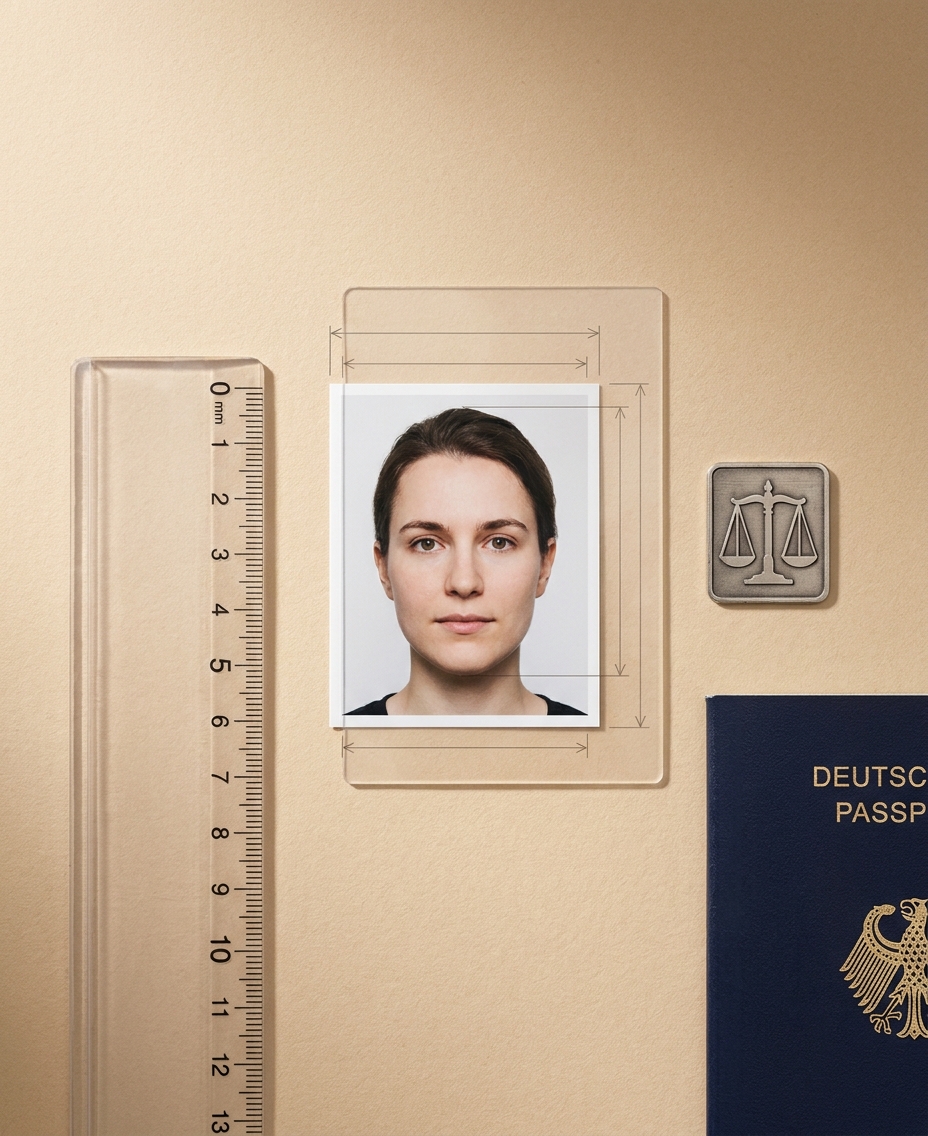
An online file is no longer accepted for a passport, ID card or residence permit
What the authority now requires
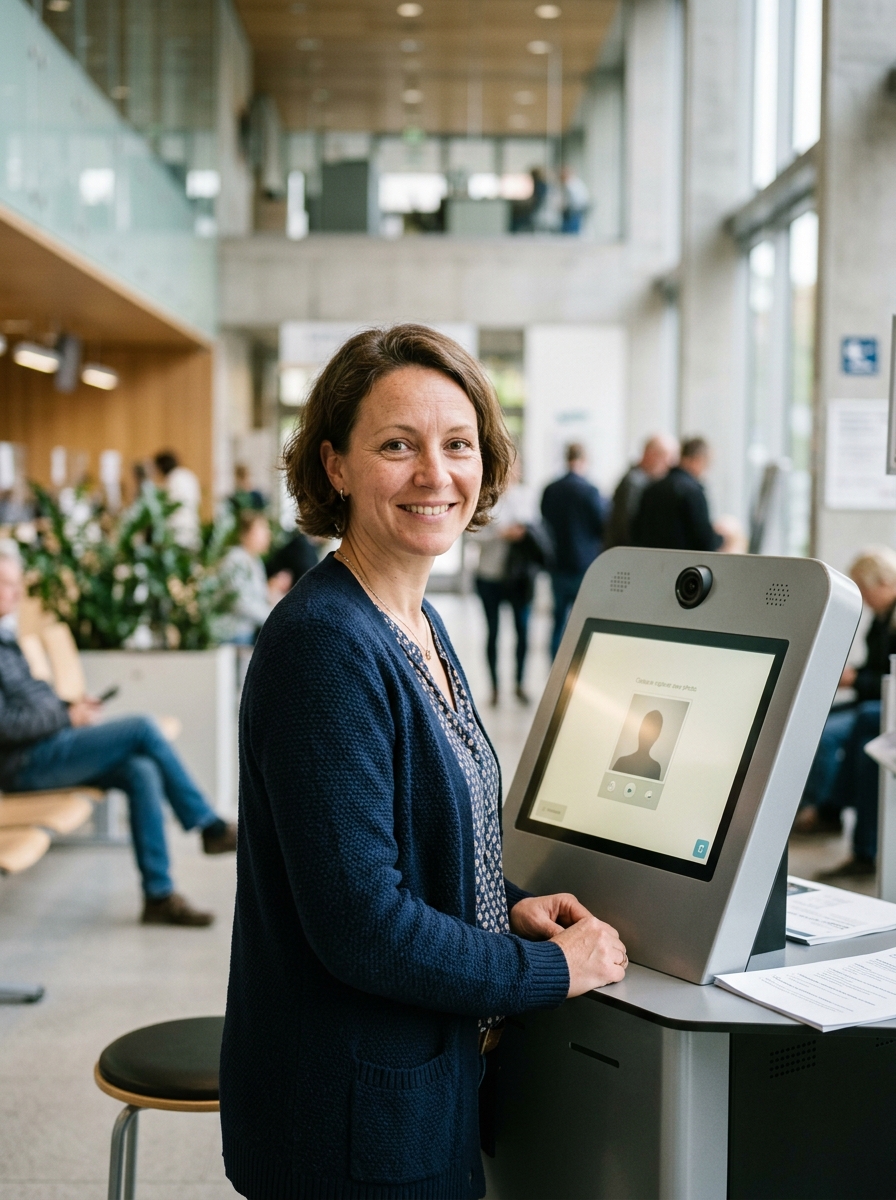
For a German passport, Personalausweis or Aufenthaltstitel, do not bring a file from your phone, app or home printer. The photo must be taken at the authority's terminal or by a registered service and transmitted through an encrypted, BSI-certified channel.
A correct crop does not change this rule, and neither does the right size or background. The authority needs a documented capture route, so it refuses self-printed and AI-generated files.
The honest limit of our service
Our service cannot serve this Tier 1 case. An AI portrait is not eligible for an official German identity document, and its file cannot later become a registered transmission.
Your two practical routes
Use the Bürgeramt terminal if it is available, or a registered photo studio that sends the image digitally. The terminal costs €6 per photograph, while a photo studio costs €15 to €40.
A home-made photo can still work, but check the document first
An online or app photo can still be used for a driving licence, health insurance card and student ID. Most visa applications allow it too, but check the destination country's dimensions before you make or print the photo.
For these documents, check the format and capture rules. A kiosk print from an app starts at €5.95; a 10 × 15 cm print tile holds around four to six small photos and costs about 29 cents at a drugstore photo station.
1. Find daylight
Stand facing a window to avoid hard shadows.
2. Use a plain wall
Choose a white or light grey background without a pattern.
3. Set the camera level
Keep it at eye level and about 1.5 metres away.
4. Keep neutral
Close your mouth and avoid reflections on glasses.
5. Check the rules
Check head size and background before exporting the file.
6. Print
Choose a kiosk print or the required document method.
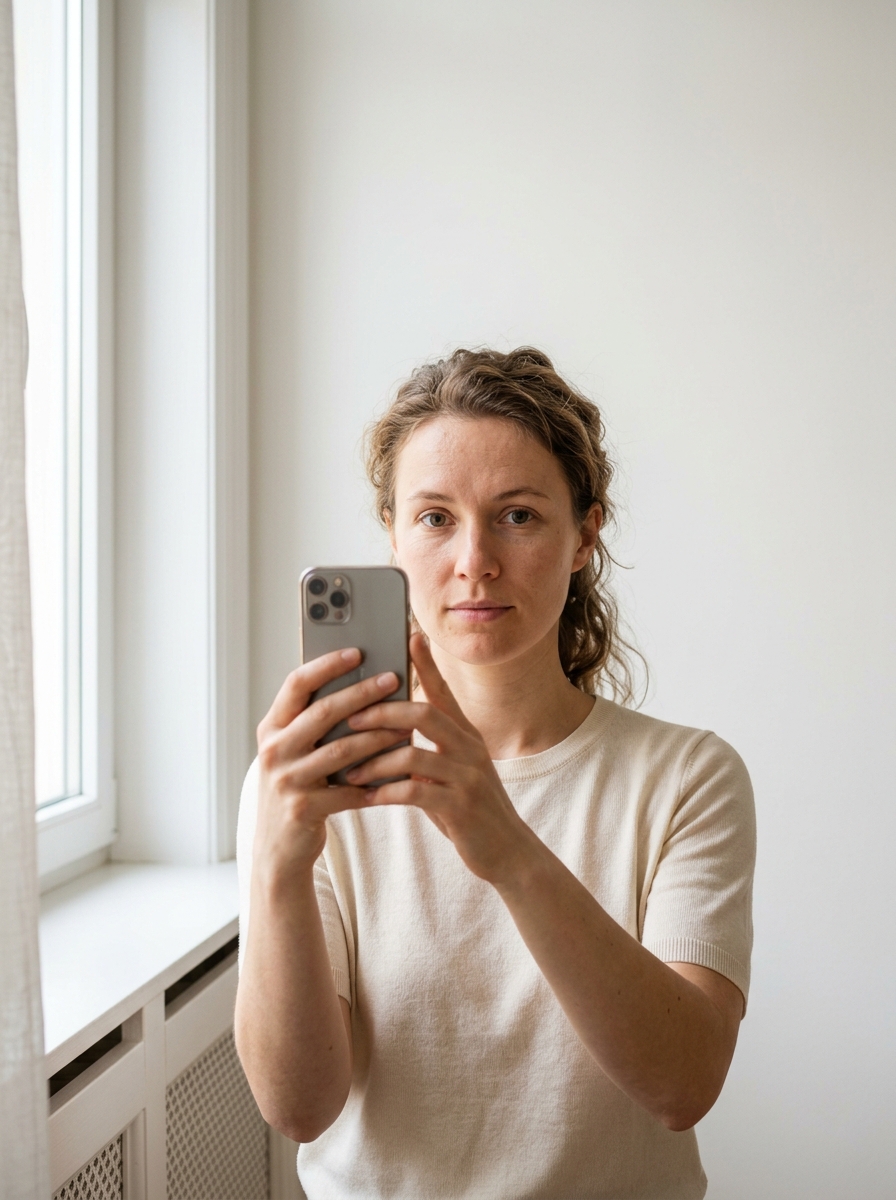
Light, a plain wall and a correct crop matter for Tier 2. They do not override the Tier 1 capture requirement.
The measurements for a compliant Tier 2 file
For documents that still accept an online or printed photograph, use 35 × 45 mm, with a head height of 32 to 36 mm from chin to crown, excluding the hair. The eye line should sit at roughly 60% of the image height. At 300 dpi, the minimum is 413 × 531 pixels and the file must not exceed 5 MB.
Use a JPG file at 300 dpi when a digital file is requested. A plain, light grey background is standard, and #D9D9D9 is a useful reference. These measurements help with Tier 2 documents, but never make a home-made file eligible for Tier 1.
| Check | German requirement | Why it matters |
|---|---|---|
| Print size | 35 × 45 mm | The outside dimensions are fixed. |
| Head and eyes | 32 to 36 mm; eye line at about 60% | The face must be positioned consistently. |
| Digital file | 413 × 531 px at 300 dpi; maximum 5 MB | Low resolution can fail at print. |
| Background | Plain and light, in a neutral tone | A pattern or gradient leads to rejection, as does a shadow. |
The reason is technical: it closes the morphing route
This restriction is technical, not political. Face morphing can combine two faces into one image that works in biometric checks for both people. The official route therefore ties the image to its capture and secure transmission.
2014
A Magdeburg demonstration showed that one combined face could work for both people in EU passport biometric systems.
2020
A BSI study confirmed that standard image-editing software could produce morphs capable of defeating biometric comparison.
2024 and 1 May 2025
The regulations were amended, then the official capture and encrypted transmission rule came into force.
2026
DIN ISO/IEC 19794-5 was tightened to check for frequency artefacts typical of AI images.
Pay for the route your document actually needs
| Route | Cost | Appropriate use |
|---|---|---|
| Bürgeramt terminal | €6 per photograph | German passport, ID card and residence permit. |
| Registered photo studio | €15 to €40 | All document types, including digital transmission. |
| App photo and kiosk print | From €5.95 | Driving licence, health insurance card and print-based Tier 2 uses. |
| AI portrait for Tier 3 only | First photo free; from €4.99 for 2 | A CV or LinkedIn profile, or a company directory. |
The larger AI portrait packages are €29 for 12 photos and €79 for 40+ photos. They are a price for a professional portrait, not an alternative price for an official German document photo.
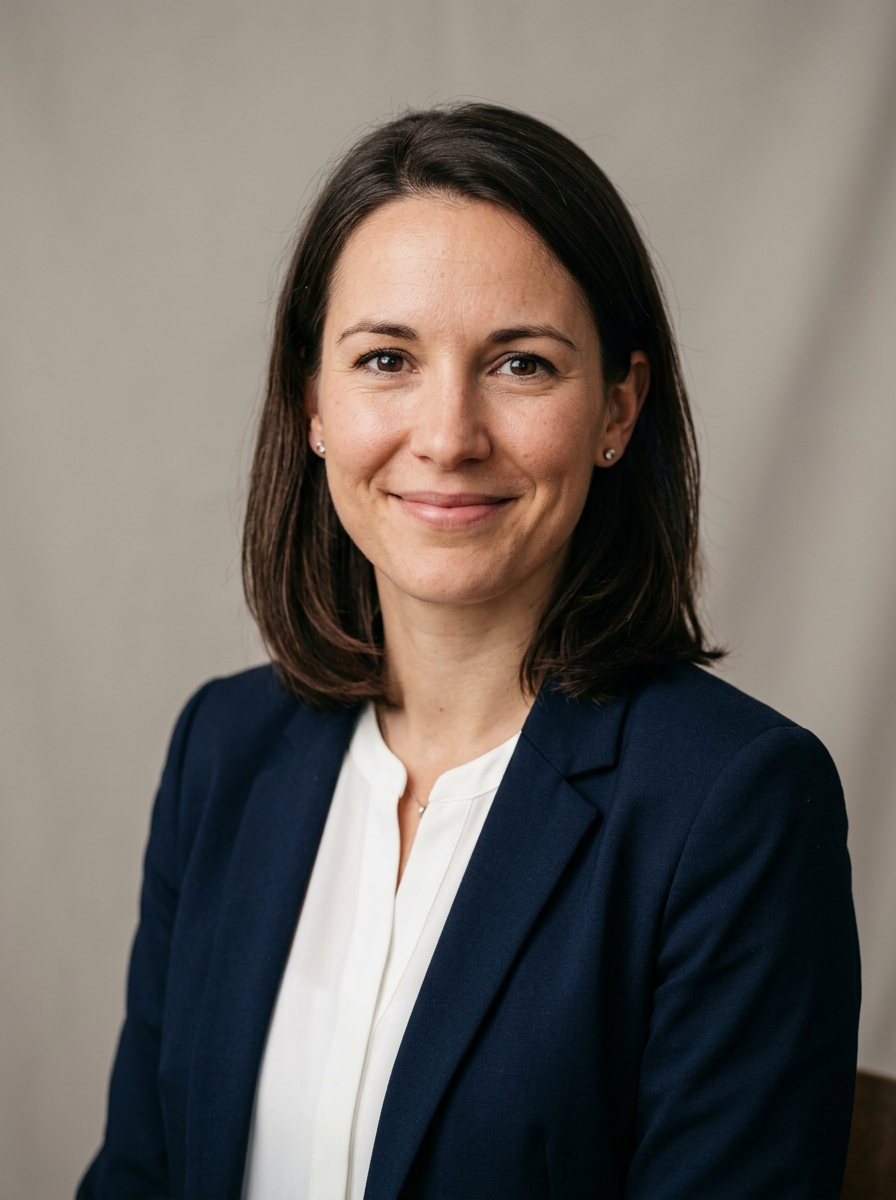
A useful application portrait can be calm and formal without becoming an official document photograph.
For a CV or LinkedIn, you do not need a passport photo at all
A job application, CV, LinkedIn profile and company directory are not official identity documents. AI portraits are permitted here and may be rendered in a biometric-looking style, as long as they remain portraits for that purpose.
Profilfoto KI belongs only in this third category: it creates AI portraits for professional profiles, not official German document photos. Read about an AI headshot generator or a CV photo in Germany before choosing a style. If a professional portrait is what you actually need, the first photo is free, so you can judge the result before paying anything.
The distinction in practice
Can I use an online passport photo for a German passport?
No. Since 1 May 2025, it must be captured at the Bürgeramt terminal or by a registered service with encrypted, BSI-certified transmission.
Does the correct 35 × 45 mm format make my home file acceptable for an ID card?
No. The dimensions describe the image, but Tier 1 also requires the registered capture and transmission route. Correct format is useful for Tier 2, not a workaround for Tier 1.
Can I make a visa photo at home?
Most visas allow an app photo, but the destination country sets the dimensions. Check those rules, because the German 35 × 45 mm format is not universal.
Why did Germany stop accepting supplied files?
The change addresses morphing, where two faces can be combined into one photo that passes biometric comparison for both people. Tying the capture to a documented, supervised process is what closes that attack for official German identity documents.