Face
Keep the beard or clean shave you normally wear. The important detail is a deliberate edge at the cheek and neck.
A professional headshot for a man is rarely improved by adding more formality. It improves when the beard, collar, pose and expression all tell the same story about the work you do.
The practical test is simple: would a colleague recognise you immediately, and would the picture still fit the meeting you are about to join?
Test your first photo for free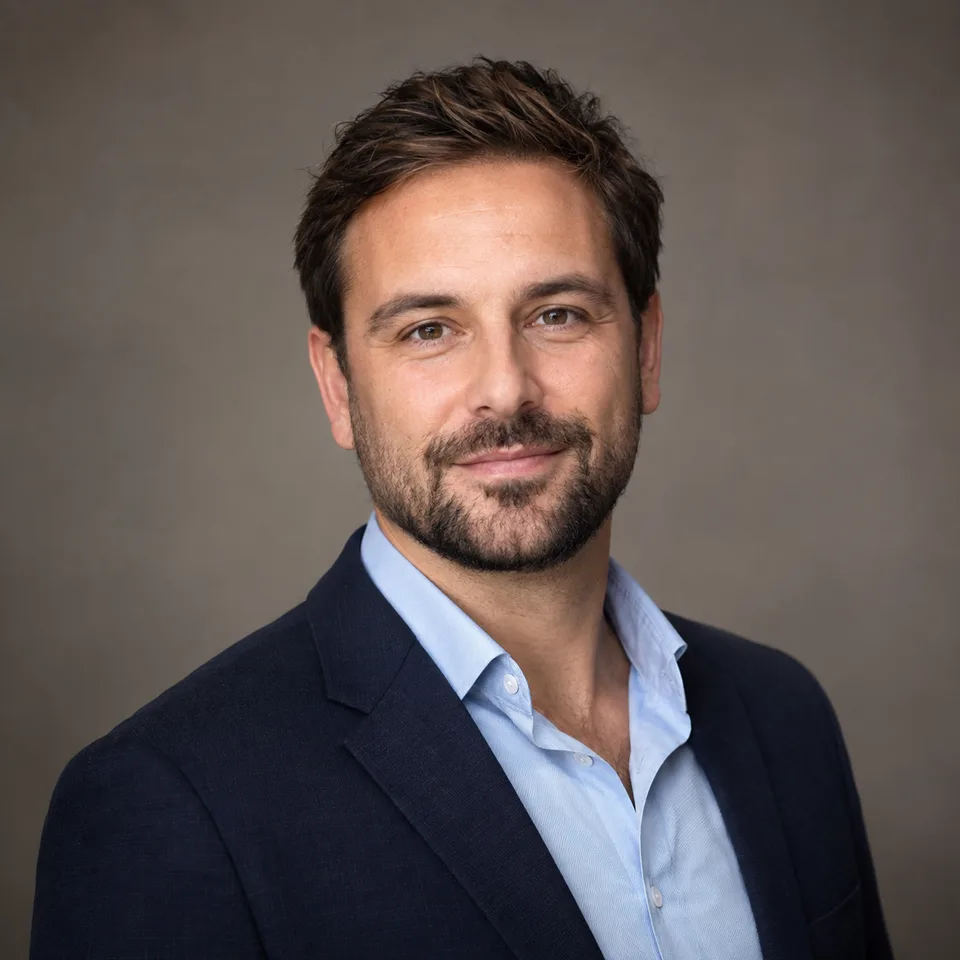
Keep the beard or clean shave you normally wear. The important detail is a deliberate edge at the cheek and neck.
Use a tie when the role and company call for one. An open collar can be the more credible choice elsewhere.
Let the shoulders drop, angle the torso a little and keep direct eye contact. Avoid crossed arms in a tight portrait.
Facial hair changes the visible shape of the jaw. That makes it one of the first places to inspect in an AI portrait. Look for a beard line that suddenly becomes too sharp, changes density from one side to the other or merges into the collar. Check the moustache around the lip as well.
You do not need to shave for a professional photo if you normally wear a beard. A clean shave and a maintained short beard can both look professional. An accidental in-between look is harder to read because it can appear as though the photo was taken without preparation.
Hair deserves the same test. The style can be neater than on an ordinary day, but the hairline, colour and amount of hair should still belong to you. A flattering result that creates a different person will fail as soon as somebody meets you.
A suit is not automatically the most professional answer. Clothing works as context. A tie can fit banking, law, insurance and other formal workplaces. It can feel overdressed for a product team, a creative studio or a company where senior colleagues appear with an open collar.
If you are unsure, look at how people one level above the role present themselves on the company site. Match that degree of formality. Do not copy a specific person; use the pattern to decide between tie, open collar, knitwear or a simple jacket.
| Context | Useful starting point | Check before using it |
|---|---|---|
| Formal client work | Dark jacket, light shirt, optional tie | Does the collar sit naturally and stay symmetrical? |
| Modern office role | Jacket with an open collar | Does it look like your normal level of formality? |
| Creative or technical work | Plain shirt or fine knit | Is the result professional without becoming costume-like? |
For the difference between clothes in your upload and clothes in the generated result, read what to wear for an AI headshot. If the picture is going into an agent directory, the real estate headshot page shows eight portraits at the 72 pixel tile size and which of them still read.
Turn the torso about 30 to 45 degrees and keep the face toward the lens. This creates depth without weakening eye contact. Relaxed shoulders matter more than a dramatic angle. If the frame only shows head and shoulders, leave the hands out rather than bringing one to the chin.
Crossed arms can work in a wider team portrait, but they often create a visible barrier in a tight profile picture. The safer choice is an open upper body with the chin level and the eyes directed into the lens.
An AI generator may create the final pose as part of the selected style. Your source selfie still needs a clear face and a natural expression. See the complete headshot pose guide before choosing the source image.
Compare several results against a recent phone photo. Ask whether the jaw, nose, ears and spacing around the eyes still match. Then check whether the expression feels like one you make in real life. The result should look like a well photographed version of you, not a more conventionally attractive stranger.
The same standard applies to skin. Texture is normal. Removing every line and pore makes a portrait less credible, especially when the rest of your public profile contains ordinary photographs. The headshot examples show what to inspect in good and bad results.
A tie fits formal roles and conservative company contexts. An open collar often fits technology, creative work and less formal teams. Match the level of formality used by people just above the role.
No. Keep facial hair if it is part of your normal appearance. Clean cheek and neck edges matter more than choosing between clean-shaven and bearded.
Use an expression that you can repeat naturally. A small, relaxed smile often feels more credible than a forced broad grin or a deliberately severe expression.
It can, but inspect the beard, ears, hairline, collar and eyes before using the picture. Those details reveal identity drift and image artefacts quickly.