A doctor headshot has two jobs, and the white coat fits only one
An application photo should show the person behind the credentials. A practice portrait should help a patient recognize a physician at a glance.

What makes a good professional headshot for a doctor?
A good doctor headshot uses direct eye contact, a restrained genuine smile, and upright posture. The pose should feel composed rather than staged, and the face must remain clear in a small directory tile.
Willis and Todorov reported in Psychological Science in 2006 that people formed trustworthiness judgments after one tenth of a second of seeing a face. There is no reliable number for how much a good portrait increases patient trust, so we do not give one. Clothing depends on the purpose of the image, which is the distinction below.
Should a doctor wear a white coat in their headshot for a practice website or a directory profile?
For a practice website or directory profile, a white coat is a familiar signal that identifies a doctor immediately. For an application file, leave it out. Work clothing shows the job, and the job is already in the CV. The photo is the one place where the person behind that record becomes visible.
A craftsperson does not apply in work clothes, and a cook does not need an apron in an application portrait. Medicine follows the same rule. It only feels different because the white coat is such a strong symbol.


These are generated examples from our own set, not real physicians. They illustrate the two purposes rather than a universal dress code.
| Decision | Application file | Practice page, team page, LinkedIn |
|---|---|---|
| Who looks first? | Recruiting staff and the department head | Patients and colleagues |
| Clothing | Jacket or blazer, no coat | White coat or scrubs are common |
| Background | Quiet and plain | The clinic or practice may be visible |
| Crop | Head and shoulders, portrait orientation | More flexible, often landscape for a team page |
| Job of the image | Shows the person behind the documents | Builds recognition before an appointment |
Scrubs follow the coat rule because both are work clothing. One physician in a German medical forum reported invitations from university hospitals while using a professional portrait in scrubs, so they are not a knockout. They remain the less safe application choice.
German medical career guides advise against the coat in an application photo, while providers that generate coat portraits recommend it. Noticing who made each recommendation resolved the apparent contradiction for us.
Match the expression to the position
At an early clinical stage, a shirt or blouse is enough, and a friendly smile fits. For a first hospital post, the picture carries more weight because experience and references are still limited. Use a jacket or blazer, a calm background, an open look, and a restrained smile.
For a senior physician or department head, choose a calm, serious expression because a wide smile can weaken authority. The careers portal of the German medical journal Deutsches Ärzteblatt also warns that many chief physicians have little patience for creative presentations.
Clothing, background, stethoscope, glasses
For men, start with a dark suit and light shirt, with an optional tie, or a dark jacket with an open collar. Navy, charcoal, and black work well. Keep the beard groomed, the hair neat, and the shirt free of wrinkles. For women, a blazer over a plain blouse in muted colors is a reliable choice. Use jewelry and makeup sparingly, avoid a deep neckline or bare shoulders, and wear the hair as you would at the interview. The headshot clothing guide explains the difference between upload clothing and a generated outfit.
For directories, use a neutral, softly blurred light blue or white background. A softly blurred practice room suits the practice website. An application calls for plain gray, light blue, or a soft gradient, without corridors, bookshelves, or windows. Match background and clothing so hard contrast does not make the face look pale. The background guide covers that check.
A stethoscope is optional. It is a strong signal for general practitioners and internists, but it can look out of place for radiologists, psychiatrists, or dermatologists. Keep glasses if you wear them daily because they can strengthen perceived expertise, especially for younger physicians, but remove reflections. A groomed beard is fine.
One face across the directory, the practice site, and Google
Use a square crop for directories, a portrait crop on the practice website, and the same recognizable face on the Google Business profile. Repetition makes recognition easier across those placements.
A directory list shows the photo small and above the specialty, so the crop must keep the face large. Use the 72 pixel test to check facial share, contrast, and expression before choosing.
Compare identity before you judge styling

The selfie is the upload. Use it as the identity reference.
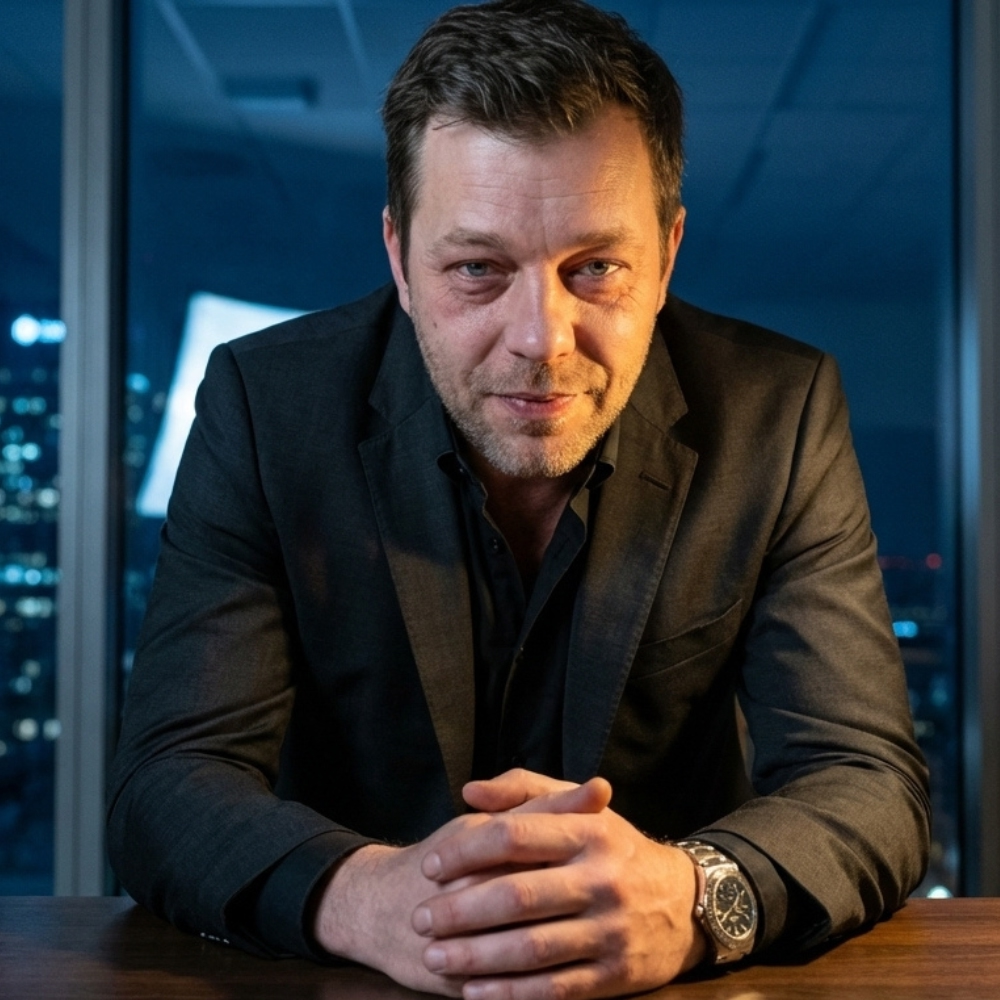
The right image is the generated portrait. Styling changes, but the person should remain recognizable.
This pair comes from our own example set. Compare the face first, then use the identity check for men's headshots to inspect the hairline, ears, eyes, beard edges, and collar.
Can a physician use an AI headshot generator for their practice website and directory profile, or is a photographer necessary?
Yes, if the result is still recognizably you. The practice, hospital, or directory may have its own image policy, and that policy takes priority. We do not know each organization's rules, so we do not state them.
| Question | AI headshot | German studio |
|---|---|---|
| Cost | From €4.99 | €50 to €300 as of August 2026 |
| Time | About 2 minutes | Half a day with travel |
| Clothing options | Coat, business, and casual generated styles | One outfit, which is what you wear |
| Backgrounds | Neutral or practice setting | Standard studio background |
| Files | 12 to 40 files | Usually one file |
Read the AI versus photographer comparison for the workflow tradeoffs. The professional headshot cost guide explains German studio prices and finished files.
Know where the uploaded images go
Physicians work under confidentiality duties, so source image handling deserves a direct answer. Profilfoto KI stores uploaded selfies on servers in Frankfurt and deletes them automatically after no more than 90 days, or immediately through self-service deletion. The images are not used to train external AI models. Read the privacy guide for more detail.
Check the likeness before you pay
The process takes about two minutes, and the first photo is free with a watermark. Each paid package is a one-time payment, so inspect your likeness before choosing one.
Doctor headshot questions
White coat or business clothing for a directory profile?
Both work. The coat signals doctor immediately and feels familiar, while business casual looks more modern and can fit private practices or founders.
Should a doctor smile?
Use a restrained smile rather than a wide one. Senior roles usually call for a calmer expression.
Is a generated image allowed for a medical ID card or an official document?
No. Generated images are not permitted for official identity documents, though they can be used on practice websites, directories, and LinkedIn.
Should a stethoscope be visible?
It is optional. It fits general practice and internal medicine better than radiology, psychiatry, or dermatology.
Does the coat belong in an application photo?
No. Career guides advise against it because it is work clothing and hides the person, but it is common on team pages and LinkedIn.
What if my hospital or the directory publishes its own photo rules?
Follow their rules. This page cannot know the current policy of every hospital or directory.
Inspect the portrait before choosing
Therapist headshots
See why camera height changes the relationship. Apply the same check to a medical portrait.
ThumbnailThe 72 pixel test
Reduce the portrait to directory size. Check what remains readable.
ClothingWhat to wear
Separate the upload clothes from the generated outfit. Choose each for its own job.
SettingHeadshot backgrounds
Choose a background color first. Then inspect whether the lighting belongs to it.