A therapist headshot should meet clients at eye level
Your portrait should feel like a truthful first meeting. Start with an eye-level camera, gentle light, and a face that remains recognizable wherever a client sees it.

What makes a good headshot for a therapist's Psychology Today profile?
A good therapist headshot places the camera at eye level, uses gentle, warm light instead of cold studio blue, and keeps your expression readable in a small directory tile. Let your face occupy enough of the square to survive reduction. Use an open gaze, a relaxed mouth, and a gentle smile that reaches the eyes.
Willis and Todorov reported in Psychological Science in 2006 that people formed judgments of trustworthiness after one tenth of a second of seeing a face. Psychology Today is one example of a directory where your portrait can sit small beside other therapists in a results list. Test it at 72 pixels for facial share, background contrast, and a readable expression, then check the directory itself for current upload requirements.
Let the camera establish an equal relationship
Camera height changes the relationship before the first conversation begins. A view from above can look dominant, while a view from below can feel distant. Eye level says that you are meeting the viewer on equal terms. Compare the eyes with the lens position before judging clothes or background.
Light deserves the same care. The tenth of a second from Willis and Todorov applies here as well, and a person in a crisis looks for safety in that moment rather than authority. Choose gentle, warm light instead of cold studio blue, because a sterile portrait with hard contrast and a distant pose is the one that makes someone scroll past.
Use one recognizable portrait across your practice
Carry the same face from the directory tile to your practice website, Google Business, and the video tile used for online therapy. Repetition helps the person who contacts you connect the portrait with the person who appears in the first session.
Reduce each candidate to 72 pixels before choosing. Check how much of the square belongs to your face, whether the face separates from the setting, and whether the expression remains legible. Keep a square original of at least 1024 × 1024 pixels, then inspect every placement separately.
Physicians face the same directory tile with one extra question about clothing. The doctor headshot guide explains why the white coat belongs on the practice page and not in the application file.
What should a therapist wear and what background should they use for a professional headshot?
Begin with muted burgundy, lavender, soft beige, or gray. Avoid bright colors and distracting patterns. Choose a classic blazer for a more formal practice style, or select a softer look when that fits how you normally meet clients.
| Practice style | Starting point | Check before you use it |
|---|---|---|
| Classic | Blazer in a muted color | Would clients recognize this level of formality? |
| Warm | Soft top in burgundy, lavender, beige, or gray | Is the color quiet enough to keep attention on your face? |
With a generated portrait, you choose the visible clothing as part of the style. The clothes in the uploaded selfie do not become the final wardrobe. The AI headshot clothing guide explains why the upload and the finished outfit are two separate decisions.
Choose the color before you inspect the light
A softly blurred practice room can show bookshelves, plants, or warm wood without turning them into the subject. A neutral background in muted beige or lavender also works. Decide on the color first, then check that the light on your face follows the same direction as the setting. The background guide explains this check.
A gentle, restrained smile should reach the eyes without becoming cheerful performance. Keep the gaze open, the mouth relaxed, and the light soft. If you wear glasses during sessions, keep them on so the portrait matches the person a client will meet.
Compare identity before you judge styling

The selfie is the upload. Use it to check the face in the generated portrait.
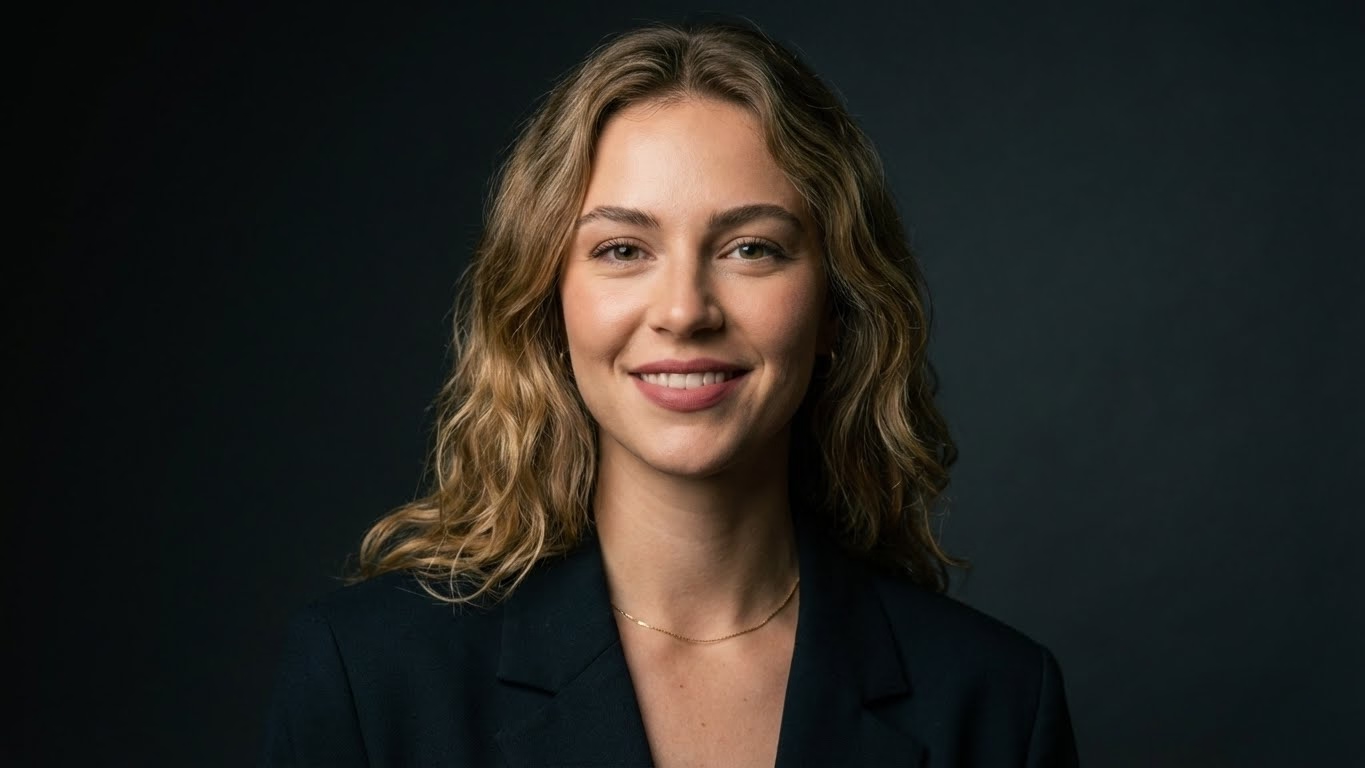
The result changes the styling. It should still preserve the recognizable person.
This pair comes from our own example set. The selfie on the left is the upload, and the image on the right is the portrait the tool generated from it.
Can a therapist use an AI headshot generator for their practice website and directory profile, or is a photographer necessary?
Yes, an AI headshot can work if it preserves your identity. The person who calls after seeing the photo may sit across from you in the first session or see you in a video tile. Ask whether a colleague would recognize you immediately, and reject any result that changes recognizable features.
Inspect the hairline, ears, eyes, collar, and any beard edges at full size. Keep your glasses if you normally wear them in practice. Styling can change, but it should not disguise identity drift.
| Question | AI generator | Photographer |
|---|---|---|
| What does it cost? | German prices: €4.99 for two images; first photo free with watermark | German studios: €50 to €300, averaging €150, August 2026 |
| Must the practice room be real? | Generated setting | Photographs the actual room |
| Who helps in front of the camera? | You choose and review the result | Personal coaching during the session |
Read the AI versus photographer comparison for the tradeoffs. The headshot cost guide covers German studio prices and finished files.
Know where the uploaded images go
Therapists work under confidentiality duties, so the handling of source images deserves a direct answer. Profilfoto KI stores uploaded selfies on servers in Frankfurt. The selfies are deleted automatically after no more than 90 days, or immediately through self-service deletion. They are not used to train external AI models. Read the privacy guide for more detail.
Check the likeness before you pay
Upload a selfie, choose a style, and download the result. The process takes about two minutes. The first photo is free with a watermark. Paid packages are one-time euro payments.
Therapist headshot questions
What makes a good headshot for a therapist's Psychology Today profile?
Use an eye-level camera, soft light, and a recognizable expression. Test the portrait at 72 pixels beside other directory results, then check Psychology Today for current upload requirements.
Can a therapist use an AI headshot generator for their practice website and directory profile, or is a photographer necessary?
AI can work when the result preserves your recognizable features. Choose a photographer when you need personal coaching or your actual practice room.
What should a therapist wear and what background should they use for a professional headshot?
Choose muted burgundy, lavender, beige, or gray, and avoid distracting patterns. Use a softly blurred practice room or a neutral beige or lavender setting.
Should I keep my glasses on?
Keep them on if you wear them during sessions. The person who meets you should recognize the person shown in the portrait.
What happens to the selfie I upload?
Uploaded selfies stay on servers in Frankfurt and are deleted after no more than 90 days. You can also delete them immediately through self-service.
Inspect the portrait before choosing
The 72 pixel test
See what remains readable in a small directory tile.
PreparationHeadshots for women
Prepare the source photo and review the finished portrait.
ClothingWhat to wear
Separate the upload clothing from the generated outfit.
SettingHeadshot backgrounds
Choose the color first, then inspect the lighting.