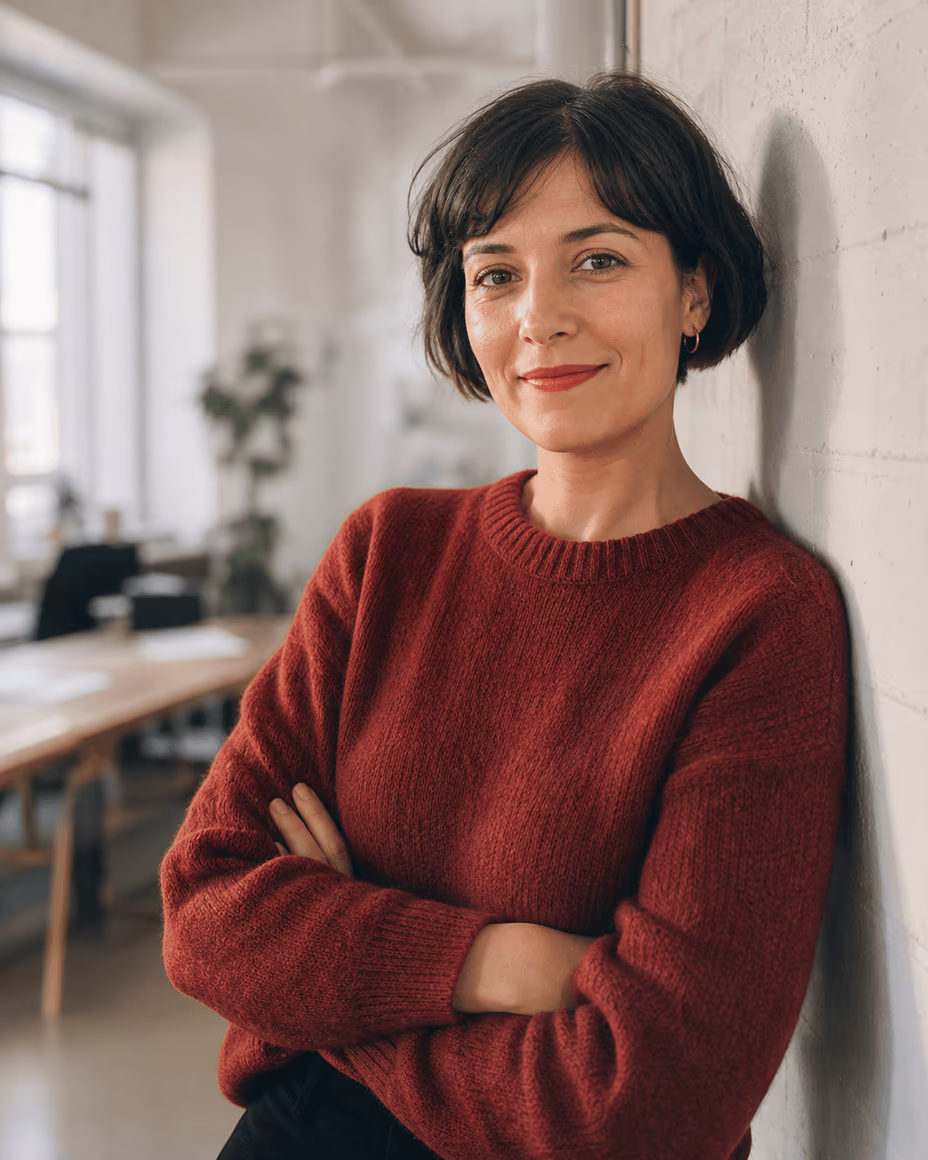
How a filmmaker headshot differs from an actor headshot
According to Wikipedia's entry on head shots, an actor's headshot exists to identify the person for casting directors. It is usually printed at 8 x 10 inches, and actors keep several "looks" for different kinds of roles. Our guide to actor headshots in the UK covers what Spotlight asks of that photo.
A director or cinematographer has no such audience. Nobody casts you from the picture, so it does a different job: it puts a face next to a credit, it looks credible beside the project, and it gives a publicist an image to drop in without asking you for anything.
A user in r/Filmmakers asked what a director headshot is supposed to look like, because FilmFreeway asks for one. The poster wondered whether an outdoor profile photo was acceptable or whether it needed a plain passport-style background. The answers were relaxed. One said it is just an image for publicity, another said it can be a literal headshot or a candid, and a third pointed to directors' pages on IMDb. That sounds like permission, and it mostly is, yet each place below has its own rules.
Where the headshot lands, and what each place asks
| Place | What it asks for | What we could not find | Source |
|---|
| IMDb and IMDbPro name page | At least 500 px wide and under 25 MB. GIF, BMP, PNG or JPEG, all converted to JPEG. The primary image editor limits size to 500 to 5000 px, and portrait orientation is recommended. Face clear and centered, no watermark or logo, only you in the frame, suitable for all audiences. | Setting a primary image needs an IMDbPro Premium membership with a claimed page. Changes are not vetted before they go live. | IMDbPro Help, IMDb image guidelines |
| FilmFreeway project | The thread above says FilmFreeway asks for a director photo. The Help Center specifies only the poster image: JPG or PNG, up to 10 MB, longest side about 1400 px. | No published headshot specification. | FilmFreeway Help, r/Filmmakers |
| Stage 32 profile | A profile photo and a cover photo, which Stage 32 calls the first impression. Covers can rotate with one, 10 or 30 images, and a tagline sits at the top. | No pixel or file-size figure in the Help pages we read. | Stage 32 Help and blog |
| Press kit or EPK | Headshots of the director and writer with short bios. High resolution, but not RAW. One guide suggests a photo of the director at work on set. | No pixel standard. The festival's own submission rules decide. | filmsourcing, Guerrilla Rep, Festagent |
| Production-company site or festival catalog | Whatever the editor sends you to match. | No common specification. Ask for dimensions and crop shape before you send a file. | None found |
The AI portrait question for IMDb
IMDbPro's help page says it accepts AI-enhanced personal images, such as photos with filters. It does not allow fully AI-generated profile photos or AI-generated representations of individuals, and it gives the reason that industry customers use IMDbPro for casting and other professional purposes.
Profilfoto KI creates portraits from your own selfies. The result is generated, so we would not count on it passing as an enhanced photo, and for an IMDb primary image you should upload a camera photograph. An AI portrait fits better on your LinkedIn profile, your own website or a company crew page. For FilmFreeway, Stage 32 and press kits we found no stated rule on AI images, so read the current terms before you upload.
What the photo should say, by role
These notes are our judgment, drawn from the sources above. No platform publishes style rules for crew photos.
Director
Authority and warmth, with a plain portrait as the safe choice. A second, on-set picture at the monitor suits press kits, in line with the Festagent suggestion.
Cinematographer
Natural light and a relaxed face. Stage 32's own example tagline reads "Cinematographer Specializing in Practical Effects", so the photo can hint at the craft with a lens or a viewfinder as long as the face stays clear, which IMDb requires for primary images.
Editor and sound
Your work is invisible on screen, so the photo carries your identity. Use a clean, sharp portrait that does not need a caption.
Producer
A business-style portrait that matches your LinkedIn page, since investors and festival staff will check both. Our business headshot guide goes into wardrobe and backdrop.
Student filmmaker
A phone photo in window light is a fair start. Keep one sharp, vertical version ready, and see our guide to taking a headshot at home.
A short file checklist
- Shoot or crop in portrait orientation. IMDb recommends it for the primary image.
- Keep a master file well above the 500 px minimum. IMDb itself advises uploading larger images when you can.
- Keep text, watermarks and contact details off the picture. IMDb forbids contact information, logos and age or height details.
- Center the face with some margin, because IMDb's editor previews both a round and a rectangular crop.
- Use the same portrait on IMDb, festival pages and LinkedIn so people connect the profiles.
- Keep a tight headshot and an on-set photo as two separate files, and replace both when your look changes.
Sizes in general are covered on our page about headshot size and resolution, and the matching LinkedIn banner is covered in our LinkedIn background photo guide.
Where Profilfoto KI fits
You upload your own selfies, pick a style such as business or LinkedIn, and receive a photorealistic portrait, with no studio appointment. For a filmmaker that suits the profiles where an AI image is allowed, which makes it a quick way to get a consistent look across LinkedIn and your own site. It does not replace an on-set photo, and it does not replace the camera photograph IMDb expects.
The first photo is free and carries a watermark, so you can check the likeness before you pay. Packages are one-time payments, not a subscription: 2 photos for €4.99, 12 photos for €29 and 40 photos for €79. Uploaded selfies are stored in Frankfurt and deleted automatically after 90 days at the latest.
Questions people ask
What does a director headshot look like?
There is no fixed format. One user in r/Filmmakers was told it is simply an image for publicity, either a portrait or a candid. Look at directors' pages on IMDb for the range, and pick something sharp and recent, preferably vertical.
Does the headshot affect whether a festival accepts my film?
We found no data on it. A thread in r/Filmmakers asked the question and got no answers. Festivals select films, so spend your effort on the film and the cover letter first, and keep the photo clean.
What size does IMDb want for a headshot?
IMDb requires at least 500 pixels in width, under 25 MB, and recommends portrait orientation. The primary image editor limits images to between 500 and 5000 pixels.
Can I use an AI headshot on IMDb?
IMDbPro does not allow fully AI-generated profile photos, although it accepts AI-enhanced personal images such as photos with filters. For IMDb, upload a camera photograph.
What size is a FilmFreeway headshot?
FilmFreeway publishes no headshot size that we could find. Its Help Center lists the poster image at up to 10 MB in JPG or PNG with a longest side of about 1400 pixels, so a vertical headshot at similar proportions is a safe bet.
Should a cinematographer hold a camera in the photo?
It is a matter of taste. IMDb requires a clear, centered face for primary images, so any prop must stay out of the face. A second photo with the camera can serve press kits.
Sources (read on 23 October 2026)
Related pages
Create your first photo free