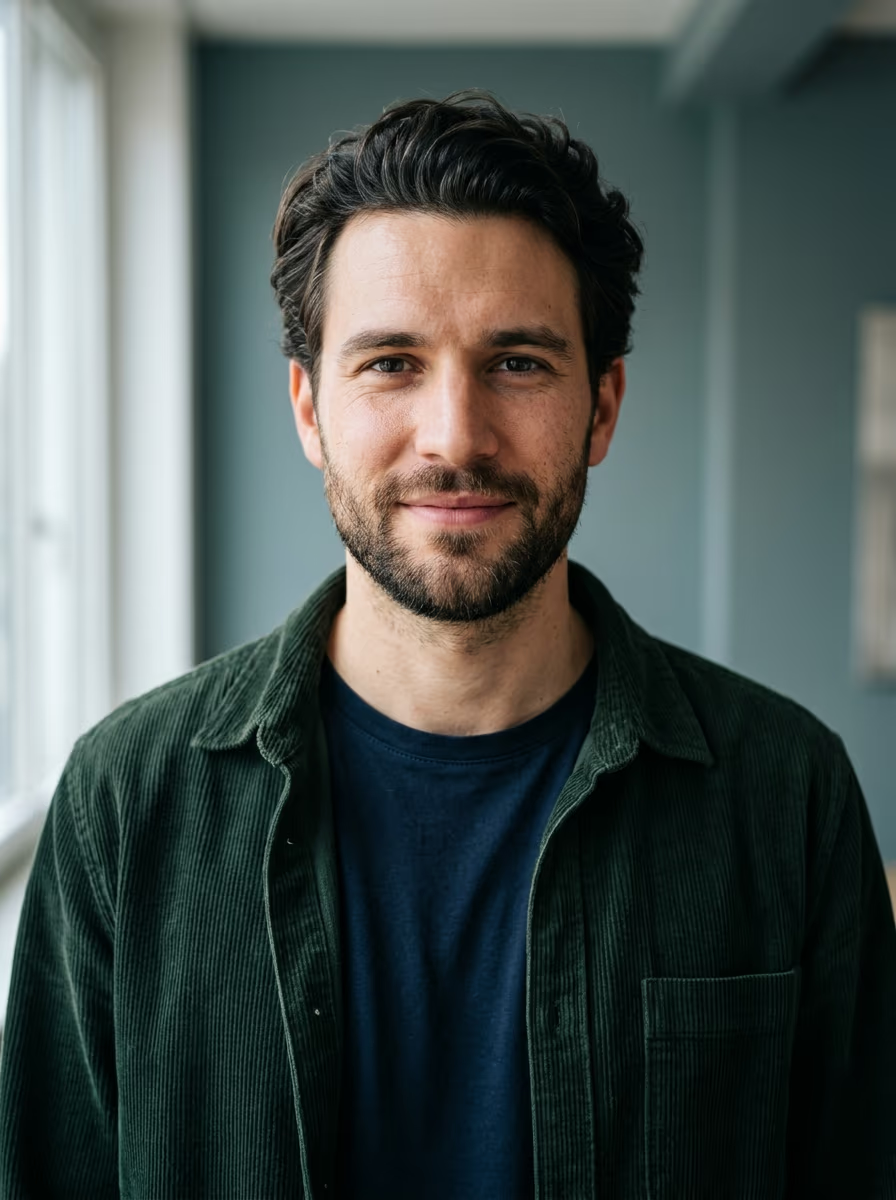
The set a musician is asked for
Press-kit guides agree on one thing: a single image is not enough. Showgraphers, a gig photography studio, lists five photos every musician should have: a clean headshot, an environmental portrait shot somewhere that suits your music, a live performance photo and a frame with open space where a designer can put text, plus versions that fit a wide banner and a square avatar. Waterbear, a UK music organisation, suggests up to five different band images in an electronic press kit.
The clean headshot is the one journalists and promoters meet first. It is also the only one of the five that needs no venue and no second person in the room.
Image spec sheet for a musician profile
Spotify's numbers come from its own support page. The social and print figures come from a UK press-shot guide and are guidance, not platform rules.
| Where it goes | Shape and size | What the source says | Which shot fills it |
|---|
| Spotify artist avatar | Square, at least 750 x 750 px | JPEG, PNG or GIF; no text or busy backgrounds | Headshot, cropped square |
| Spotify header | Wide, at least 2660 x 1140 px | Same content rules | Live or environmental shot |
| Instagram feed | 4:5 portrait or 1:1 square | Profile grids display feed posts at 3:4, so crop with that in mind | Headshot or environmental |
| Stories, Reels, TikTok | 9:16 | Full vertical frame | Any, shot or cropped vertical |
| Website or blog banner | Landscape, about 16:9, for example 1920 x 1080 px | Example size, not a minimum | Live or environmental shot |
| Poster or print | At least 300 dpi, with room to crop | Extra space for overlays and text | Shot with negative space |
The headshot only has to work in a square, so it is the one image where a profile portrait does the whole job. The wide formats need width and context, and a tight portrait cannot be stretched into one.
Where a portrait from your selfies fits, and where it does not
Profilfoto KI creates a realistic portrait from your own selfies in a style you choose, with no studio appointment. Creative Studio is in the paid packages and is the style closest to this use. You choose a style, not a background, and there is no image editor, so crops and resizes happen in your own software.
That makes it a fit for exactly one of the five shots: the clean headshot, and its square crop for an avatar. It cannot produce a live photo, because nobody played a gig. Nor can it make an environmental portrait of your rehearsal room or a band picture, because the service makes single portraits only, and group photos are not offered. If your booking depends on showing how you perform, a photographer in the room is the only route.
Opera singers and classical players
Classical musicians search for this too. One classical music photographer in London and the south of England lists concerts and opera work next to ensemble portraits and musician headshots as separate services, so the headshot is one item on a long list.
The split is the same as for a band. A portrait for a website bio or a LinkedIn profile is a headshot job. Anything showing you on stage or with an ensemble needs a photographer who can shoot in a dim hall.
Rights: what to get in writing before you pay a photographer
Many disputes start from one assumption: that paying for the shoot means owning the pictures. The UK government's copyright guidance says the creator is generally the first owner, and that for commissioned personal photos the copyright usually stays with the photographer. Posting them to social media generally needs the photographer's permission. Ownership moves only through a signed, written assignment, and a licence is the cheaper alternative.
Last Minute Musicians, a UK booking site, turns that into a short list of what to settle in writing:
- Owner. Who holds the copyright, usually the photographer unless you agree otherwise.
- Uses. Social media, press, print or merchandise.
- Exclusivity. Whether the photographer can license the same pictures to others.
- Term and territory. How long the rights last and where they apply.
- Fees. What extra or future uses cost.
- Credit. Whether the photographer's name goes in captions.
This is general information, not legal advice. A picture made from your own selfies avoids the question for the headshot, but not for anything a photographer takes.
Finding a music photographer: what the first page shows
A Google UK search for musician headshots returns portfolios: music photographers, a London studio that shoots album covers and Spotify promo portraits, and a York studio that photographs models, actors and musicians. None of the snippets we read gave a price.
Waterbear advises paying a professional rather than relying on a friend with a camera. On a tight budget it suggests photography students or clubs, if you credit them and cover expenses. For general session prices, see the page on headshot prices in the UK.
How to use the free first photo
The first photo is free and carries a watermark, which is enough to judge whether the face looks like yours before paying anything. Spotify's guidelines also say images must not infringe a person's right to control the use of their likeness, so the portrait needs to look like you.
You upload between 1 and 10 of your own selfies for each generation. The paid packages are one-off payments, not a subscription: 2 photos cost €4.99, 12 cost €29 and 40 cost €79. Your uploaded selfies are stored in Frankfurt and deleted automatically after 90 days at the latest. The images are produced through the API of a large US provider. The result is a profile picture, not a passport or other official photo.
Try the free first photoMusician headshot questions
What is the difference between a musician headshot and a press photo?
A headshot is a clean, well-lit portrait for a quick first impression. Press photos are the wider set around it: environmental portraits, live shots and frames with room for text.
What size should my Spotify artist photo be?
Spotify says avatars must be at least 750 x 750 px and headers at least 2660 x 1140 px, as JPEG, PNG or GIF. Text and busy backgrounds are not allowed, and neither is promoting a tour.
Can I use an AI portrait as my Spotify profile picture?
The guidelines we read set size, format and content rules but do not say how the picture must be made. Check that the portrait looks like you, and read the current page before uploading.
Who owns the pictures if I pay a photographer?
Usually the photographer. UK government guidance says copyright in commissioned photos generally stays with the creator unless a signed written agreement transfers it. Agree the permitted uses and any fees for extra use before the shoot.
How many photos does a press kit need?
Waterbear suggests up to five band images that differ from each other. One clean headshot is a sensible start.
Sources, accessed 6 November 2026
Start with the headshot
Make the headshot first. Create your free first photo and judge the likeness before you buy anything.