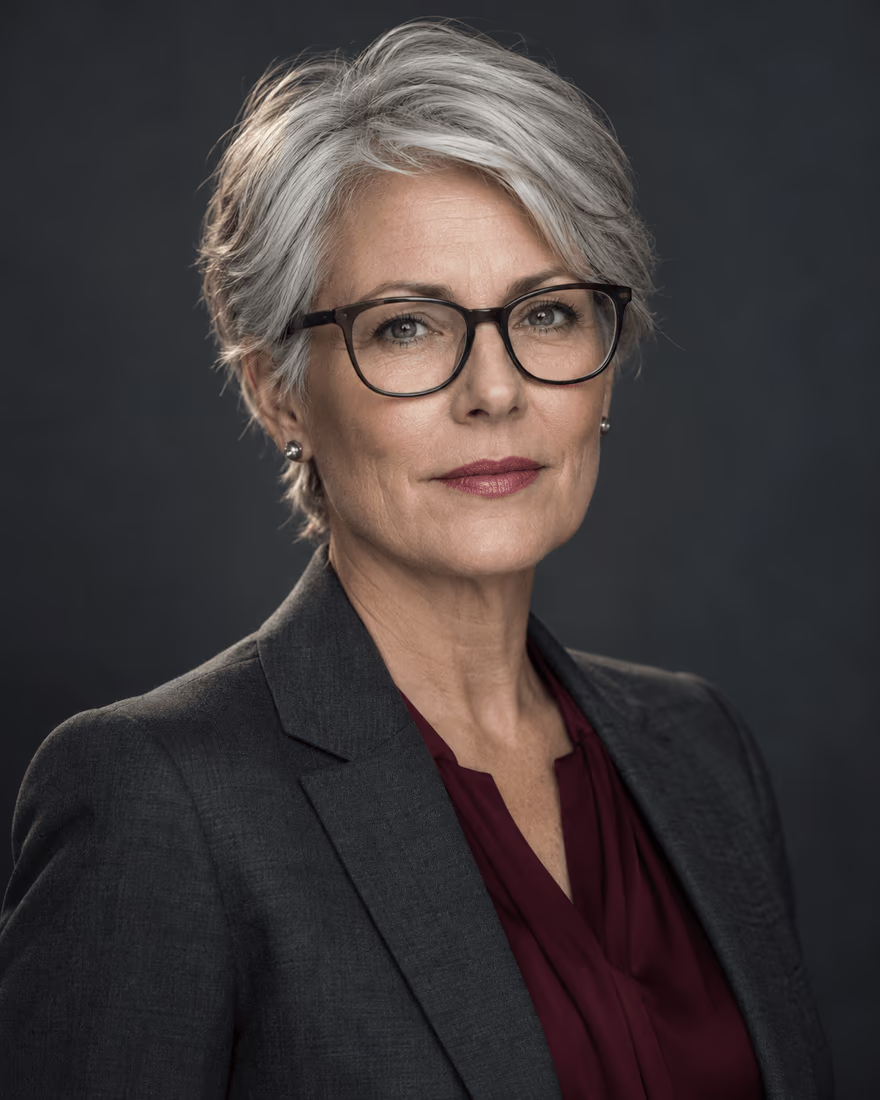
Two photos, two different gatekeepers
Your campaign materials answer to you and your designer. The voters' pamphlet photo answers to the secretary of state or the county election office. Plan the official photo first and let the campaign photo borrow from it.
Not every state prints candidate photos. The table below covers the three places whose rules we could read in primary text or a quoted statute. If you file somewhere else, ask the filing officer for the photo specification before you book anyone.
Voters' pamphlet photo rules in three places
| Place and rule | How recent | Framing and background | Alteration and extras |
|---|
| Washington, state pamphlet (WAC 434-381-130, effective April 25, 2026) | Taken within the past five years | Head and shoulders, light-colored background, but not white | Must not be digitally altered. Color preferred, black and white accepted. Printed photos from 2.5 by 3 up to 8 by 10 inches. The office may crop or adjust. |
| Oregon (ORS 251.075 and 251.087) | Not taken more than four years before filing | Conventional photograph with a plain background, showing the face, or the head with neck and shoulders | No hands or held objects, no judicial robe and no hat or uniform of a military, police or fraternal group. Minimum 1.5 by 1.75 inches. A noncompliant portrait may be modified at the candidate's expense or left out. |
| Alaska (AS 15.58.030, as quoted by a legal blog) | Within the past five years | The candidate's head, with neck and shoulders | 5 by 7 inches, printed in black and white. Read through a secondary quote, so check the current statute. |
These are the rules as we read them on the dates in the source list. Statutes change and counties add their own administrative rules, so treat the table as a map and not as a filing guide.
What "not digitally altered" means for an AI portrait
Washington says the photo must not be digitally altered. An AI portrait built from your selfies is not a retouched photograph. It is a newly generated image. We found no ruling or election office guidance that applies the word to AI tools, so nobody can tell you today how a clerk would treat one. Oregon asks for a conventional photograph, which a generated image is not.
The practical answer is blunt. For the voters' pamphlet, use a recent real photograph with no edits beyond crop and exposure. Do not gamble a filing on an AI image. If an election office tells you in writing that generated portraits are acceptable, that changes the picture, and we have not seen such a statement.
A second rule layer: AI in political communications
The law firm Wiley counted more than 30 states with laws on AI-generated media in political advertising as of June 30, 2026. Most require a clear label on synthetic content. A few, such as Maryland and Texas, prohibit deceptive synthetic media that realistically impersonates someone with intent to deceive voters.
Those laws aim at deceptive depictions. The Wiley alert does not say whether a portrait of the candidate themself falls inside, and it does not discuss routine retouching. If you plan to use any generated portrait in mailers or on a campaign site, ask your state election office or campaign counsel whether a label applies. A short label costs little next to a complaint.
What campaign guides agree on for a real photo
Two practical guides, from ActBlue and from LP Action, overlap on most points:
- Light: overcast day outdoors, or open shade. Indoors, face a large window. Avoid overhead fluorescents and direct flash.
- Camera: no selfie mode. Rear camera at eye level or slightly above, about 4 to 6 feet away, framed from the chest up.
- Clothes: solid colors or simple patterns. ActBlue says navy and forest green photograph well across complexions. LP Action suggests a dark suit with a light shirt for men and business or dressy casual for women.
- Volume: ActBlue says at least 20 to 30 frames. LP Action says several dozen to get two or three good ones.
- Files: keep high-resolution originals for print, and make smaller copies for the web.
- Edits: crop and adjust brightness, and skip smoothing filters.
Both guides tell you to loosen up before shooting, by talking to the photographer or thinking of something that makes you happy.
Where an AI portrait can still help
Profilfoto KI creates photorealistic portraits from your own selfies in a chosen style. There is no studio appointment. Outside election filings it can cover the profile you keep for your day job or an author or speaker bio. For campaign materials, read the previous sections first.
The first photo is free and carries a watermark, so you can check the likeness before paying. Packages are a one-time payment with no subscription: 2 photos for 4.99 EUR, 12 for 29 EUR, 40 for 34 EUR. You pick 1 to 10 of your own selfies per generation. Uploaded selfies are stored in Frankfurt and deleted automatically after 90 days at the latest. Styles such as Business Studio, LinkedIn Modern and, in the paid packages, Executive Suite fit this kind of portrait. We do not make passport or official ID photos, and an AI portrait does not replace the photograph an election office asks for.
Checklist before you file
- Ask the filing office for the photo specification in writing: age limit, size, background, alteration rule, file format.
- Write down the date the photo was taken.
- Shoot with a real camera and take at least 20 frames.
- Edit only crop and exposure.
- Keep the untouched original file next to the edited one.
- If a generated portrait appears anywhere in the campaign, check whether your state requires a label.
- Use one consistent face between your website and social profiles, so a voter who meets you recognizes the photo.
Questions candidates ask
Can I use an AI headshot in the voters' pamphlet?
Probably not. Washington requires a photo that is not digitally altered, and Oregon requires a conventional photograph. We found no election office guidance that accepts generated images, so ask your filing office in writing before you try.
How recent does a candidate photo have to be?
Washington requires a photo taken within the past five years. Oregon does not accept one taken more than four years before filing. Alaska's statute, as quoted by a legal blog, says five years. Other places differ, so check with your own election office.
What should a candidate wear for a headshot?
ActBlue recommends solid colors or simple patterns and names navy and forest green, in clothes you normally wear. LP Action suggests a dark suit with a light shirt for men and business or dressy casual for women, with no loud or busy patterns.
Do I need a professional photographer for a campaign photo?
The guides say to hire one if you can afford it. LP Action notes that some retail portrait studios offer several shots for about $100, and that a decent headshot can be taken with a smartphone at no cost.
Is retouching allowed on a candidate photo?
Washington bars digital alteration and Oregon's statute is silent on it. ActBlue accepts light edits such as cropping and brightness changes. To stay safe in a pamphlet submission, limit yourself to crop and exposure.
Sources
- Washington State Register WSR 26-08-043, amended WAC 434-381-130 (read November 8, 2026)
- ORS 251.075, candidate portraits for the voters' pamphlet (read November 8, 2026)
- ORS 251.087, review of portraits and statements (read November 8, 2026)
- Volokh Conspiracy post quoting Alaska Statutes 15.58.030 (read November 8, 2026)
- Wiley alert on AI restrictions in political ads, June 30, 2026 (read November 8, 2026)
- ActBlue, How to Take Your Own Campaign Headshot (read November 8, 2026)
- LP Action, Getting a Professional-Grade Campaign Photo (read November 8, 2026)